Salmon Escapement Myers Creek
Returning Chum and Coho salmon are counted every 7-10 days in our local creeks. We walk the creeks wearing chest waders to count salmon along specific sections and report finding to Fisheries Canada. These surveys can take 1-4 hours depending on the fish observed. We will supply all gear. Please email Jenn at jenn@loonfoundation.org to sign up for the survey.
Forage Fish Survey at Baker Beach
There are two species of forage fish that spawn in the intertidal on sandy beaches in the Salish Sea. Pacific sand lance tends to spawn in the winter months, late October through mid-February, and Surf smelt may be found all year long. We complete surveys by collecting 4 liters of sand, processing the sediments to reduce the volume and then take a small sample back to the lab to scan for eggs. These surveys take approximately 1.5 hours in the field and anywhere from 30 minutes to 2 hours to process on the microscope. If you would like to get involved or would like more information, please contact Jenn at jenn@loonfoundtaion.org.
Salmon Escapement Anderson Creek
Returning Chum and Coho salmon are counted every 7-10 days in our local creeks. We walk the creeks wearing chest waders to count salmon along specific sections and report finding to Fisheries Canada. These surveys can take 1-4 hours depending on the fish observed. We will supply all gear. Please email Jenn at jenn@loonfoundation.org to sign up for the survey.
Salmon Escapement Myers Creek
Returning Chum and Coho salmon are counted every 7-10 days in our local creeks. We walk the creeks wearing chest waders to count salmon along specific sections and report finding to Fisheries Canada. These surveys can take 1-4 hours depending on the fish observed. We will supply all gear. Please email Jenn at jenn@loonfoundation.org to sign up for the survey.
Salmon Escapement Anderson Creek
Returning Chum and Coho salmon are counted every 7-10 days in our local creeks. We walk the creeks wearing chest waders to count salmon along specific sections and report finding to Fisheries Canada. These surveys can take 1-4 hours depending on the fish observed. We will supply all gear. Please email Jenn at jenn@loonfoundation.org to sign up for the survey.
Forage Fish Survey at Baker Beach
There are two species of forage fish that spawn in the intertidal on sandy beaches in the Salish Sea. Pacific sand lance tends to spawn in the winter months, late October through mid-February, and Surf smelt may be found all year long. We complete surveys by collecting 4 liters of sand, processing the sediments to reduce the volume and then take a small sample back to the lab to scan for eggs. These surveys take approximately 1.5 hours in the field and anywhere from 30 minutes to 2 hours to process on the microscope. If you would like to get involved or would like more information, please contact Jenn at jenn@loonfoundtaion.org.
Salmon Escapement Myers Creek
Returning Chum and Coho salmon are counted every 7-10 days in our local creeks. We walk the creeks wearing chest waders to count salmon along specific sections and report finding to Fisheries Canada. These surveys can take 1-4 hours depending on the fish observed. We will supply all gear. Please email Jenn at jenn@loonfoundation.org to sign up for the survey.
Salmon Escapement Anderson Creek
Returning Chum and Coho salmon are counted every 7-10 days in our local creeks. We walk the creeks wearing chest waders to count salmon along specific sections and report finding to Fisheries Canada. These surveys can take 1-4 hours depending on the fish observed. We will supply all gear. Please email Jenn at jenn@loonfoundation.org to sign up for the survey.
EGC Collection at Bargain Narrows
European Green Crab, or EGC, surveys are one of our more extensive surveys. From April until October we deploy crab traps any chance we get. EGCs are one of the world's worst invasive species, and they are coming our way! These surveys take two days, although help is always appreciated if you can only commit to one day. Traps are deployed at low tide from the beach and collected the next day at the same tide. All crabs, we often catch native species, are measured and sexed before being released, unless they are EGCs. We also often catch fish, snails, shrimp, and other species that are documented and released. If you like playing in the mud, this is the survey for you! Please email Jenn at jenn@loonfoundation.org if you're interested in volunteering for any of our surveys.
Salmon Escapement Myers Creek
Returning Chum and Coho salmon are counted every 7-10 days in our local creeks. We walk the creeks wearing chest waders to count salmon along specific sections and report finding to Fisheries Canada. These surveys can take 1-4 hours depending on the fish observed. We will supply all gear. Please email Jenn at jenn@loonfoundation.org to sign up for the survey.
EGC Deployment at Bargain Narrows
European Green Crab, or EGC, surveys are one of our more extensive surveys. From April until October we deploy crab traps any chance we get. EGCs are one of the world's worst invasive species, and they are coming our way! These surveys take two days, although help is always appreciated if you can only commit to one day. Traps are deployed at low tide from the beach and collected the next day at the same tide. All crabs, we often catch native species, are measured and sexed before being released, unless they are EGCs. We also often catch fish, snails, shrimp, and other species that are documented and released. If you like playing in the mud, this is the survey for you! Please email Jenn at jenn@loonfoundation.org if you're interested in volunteering for any of our surveys.
Salmon Escapement Anderson Creek
Returning Chum and Coho salmon are counted every 7-10 days in our local creeks. We walk the creeks wearing chest waders to count salmon along specific sections and report finding to Fisheries Canada. These surveys can take 1-4 hours depending on the fish observed. We will supply all gear. Please email Jenn at jenn@loonfoundation.org to sign up for the survey.
EGC Collection at Halfmoon Bay Creek
European Green Crab, or EGC, surveys are one of our more extensive surveys. From April till September we deploy crab traps any chance we get. EGCs are one of the world's worst invasive species, and they are coming our way! These surveys take two days, although help is always appreciated if you can only commit to one day. Traps are deployed at low tide from the beach and collected the next day at the same tide. All crabs, we often catch native species, are measured and sexed before being released, unless they are EGCs. We also often catch fish, snails, shrimp, and other species that are documented and released. If you like playing in the mud, this is the survey for you! Please email Jenn at jenn@loonfoundation.org if you're interested in volunteering for any of our surveys.
EGC Deployment at Halfmoon Bay Creek
European Green Crab, or EGC, surveys are one of our more extensive surveys. From April till September we deploy crab traps any chance we get. EGCs are one of the world's worst invasive species, and they are coming our way! These surveys take two days, although help is always appreciated if you can only commit to one day. Traps are deployed at low tide from the beach and collected the next day at the same tide. All crabs, we often catch native species, are measured and sexed before being released, unless they are EGCs. We also often catch fish, snails, shrimp, and other species that are documented and released. If you like playing in the mud, this is the survey for you! Please email Jenn at jenn@loonfoundation.org if you're interested in volunteering for any of our surveys.
EGC Collection at Pool Road
European Green Crab, or EGC, surveys are one of our more extensive surveys. From April till September we deploy crab traps any chance we get. EGCs are one of the world's worst invasive species, and they are coming our way! These surveys take two days, although help is always appreciated if you can only commit to one day. Traps are deployed at low tide from the beach and collected the next day at the same tide. All crabs, we often catch native species, are measured and sexed before being released, unless they are EGCs. We also often catch fish, snails, shrimp, and other species that are documented and released. If you like playing in the mud, this is the survey for you! Please email Jenn at jenn@loonfoundation.org if you're interested in volunteering for any of our surveys.
EGC Deployment at Pool Road
European Green Crab, or EGC, surveys are one of our more extensive surveys. From April till September we deploy crab traps any chance we get. EGCs are one of the world's worst invasive species, and they are coming our way! These surveys take two days, although help is always appreciated if you can only commit to one day. Traps are deployed at low tide from the beach and collected the next day at the same tide. All crabs, we often catch native species, are measured and sexed before being released, unless they are EGCs. We also often catch fish, snails, shrimp, and other species that are documented and released. If you like playing in the mud, this is the survey for you! Please email Jenn at jenn@loonfoundation.org if you're interested in volunteering for any of our surveys.
Salmon Escapement Anderson Creek and Myers Creek
Returning Chum and Coho salmon are counted every 7-10 days in our local creeks. We walk the creeks wearing chest waders to count salmon along specific sections and report finding to Fisheries Canada. These surveys can take 1-4 hours depending on the fish observed. We will supply all gear. Please email Jenn at jenn@loonfoundation.org to sign up for the survey.
Water Quality
Water quality surveys are one of our newer surveys that piggy backs off the Raincoast Foundation’s Anderson Creek Watershed Monitoring. We use three of Raincoast’s sites in Anderson Creek and measure multiple water quality parameters. These surveys are conducted monthly through the year. Water quality monitoring is a quick and easy survey if you have limited time! Please email Jenn at jenn@loonfoundation.org if you're interested in volunteering for any of our surveys.
Salmon Escapement Anderson Creek and Myers Creek
Returning Chum and Coho salmon are counted every 7-10 days in our local creeks. We walk the creeks wearing chest waders to count salmon along specific sections and report finding to Fisheries Canada. These surveys can take 1-4 hours depending on the fish observed. We will supply all gear. Please email Jenn at jenn@loonfoundation.org to sign up for the survey.
Hotel Lake - Shoreline and Dive cleanup
📍 Lakeside Campground - Hotel Lake Road
We are teaming up with the local dive community to complete an underwater cleanup of Hotel Lake. We will need to people who are certified divers to help with the cleanup as well as people on shore to help sort and bag debris for disposal. If capacity and time allows, we would like to also complete a shoreline cleanup at the same time.
For the shoreline cleanup, please bring the following:
Sturdy footwear and weather-appropriate clothing
Rubber boots or waterproof shoes to help haul debris brought up by the divers
Work gloves
Clippers or loppers
Water and a snack
If you'd like to lend a hand, please let us know by emailing jenn@loonfoundation.org
Salmon Escapement Anderson Creek and Myers Creek
Returning Chum and Coho salmon are counted every 7-10 days in our local creeks. We walk the creeks wearing chest waders to count salmon along specific sections and report finding to Fisheries Canada. These surveys can take 1-4 hours depending on the fish observed. We will supply all gear. Please email Jenn at jenn@loonfoundation.org to sign up for the survey.
EGC Collection at Bargain Harbour Park
European Green Crab, or EGC, surveys are one of our more extensive surveys. From April till September we deploy crab traps any chance we get. EGCs are one of the world's worst invasive species, and they are coming our way! These surveys take two days, although help is always appreciated if you can only commit to one day. Traps are deployed at low tide from the beach and collected the next day at the same tide. All crabs, we often catch native species, are measured and sexed before being released, unless they are EGCs. We also often catch fish, snails, shrimp, and other species that are documented and released. If you like playing in the mud, this is the survey for you! Please email Jenn at jenn@loonfoundation.org if you're interested in volunteering for any of our surveys.
EGC Deployment at Bargain Harbour Park
European Green Crab, or EGC, surveys are one of our more extensive surveys. From April till September we deploy crab traps any chance we get. EGCs are one of the world's worst invasive species, and they are coming our way! These surveys take two days, although help is always appreciated if you can only commit to one day. Traps are deployed at low tide from the beach and collected the next day at the same tide. All crabs, we often catch native species, are measured and sexed before being released, unless they are EGCs. We also often catch fish, snails, shrimp, and other species that are documented and released. If you like playing in the mud, this is the survey for you! Please email Jenn at jenn@loonfoundation.org if you're interested in volunteering for any of our surveys.
Salmon Escapement Anderson Creek and Myers Creek
Returning Chum and Coho salmon are counted every 7-10 days in our local creeks. We walk the creeks wearing chest waders to count salmon along specific sections and report finding to Fisheries Canada. These surveys can take 1-4 hours depending on the fish observed. We will supply all gear. Please email Jenn at jenn@loonfoundation.org to sign up for the survey.
Larval Crab
As part of the Hakai Institute’s Sentinels of Change program, we monitor larval crabs, specifically Dungeness megalopae using a light trap at the PODS dock. We often catch many species of crabs as well as other invertebrates such as polychaetes, amphipods, isopods and even the occasional octopus. Please email Jenn at jenn@loonfoundation.org to sign up for the survey.
Juvenile Salmon Survey at Irvine's Landing
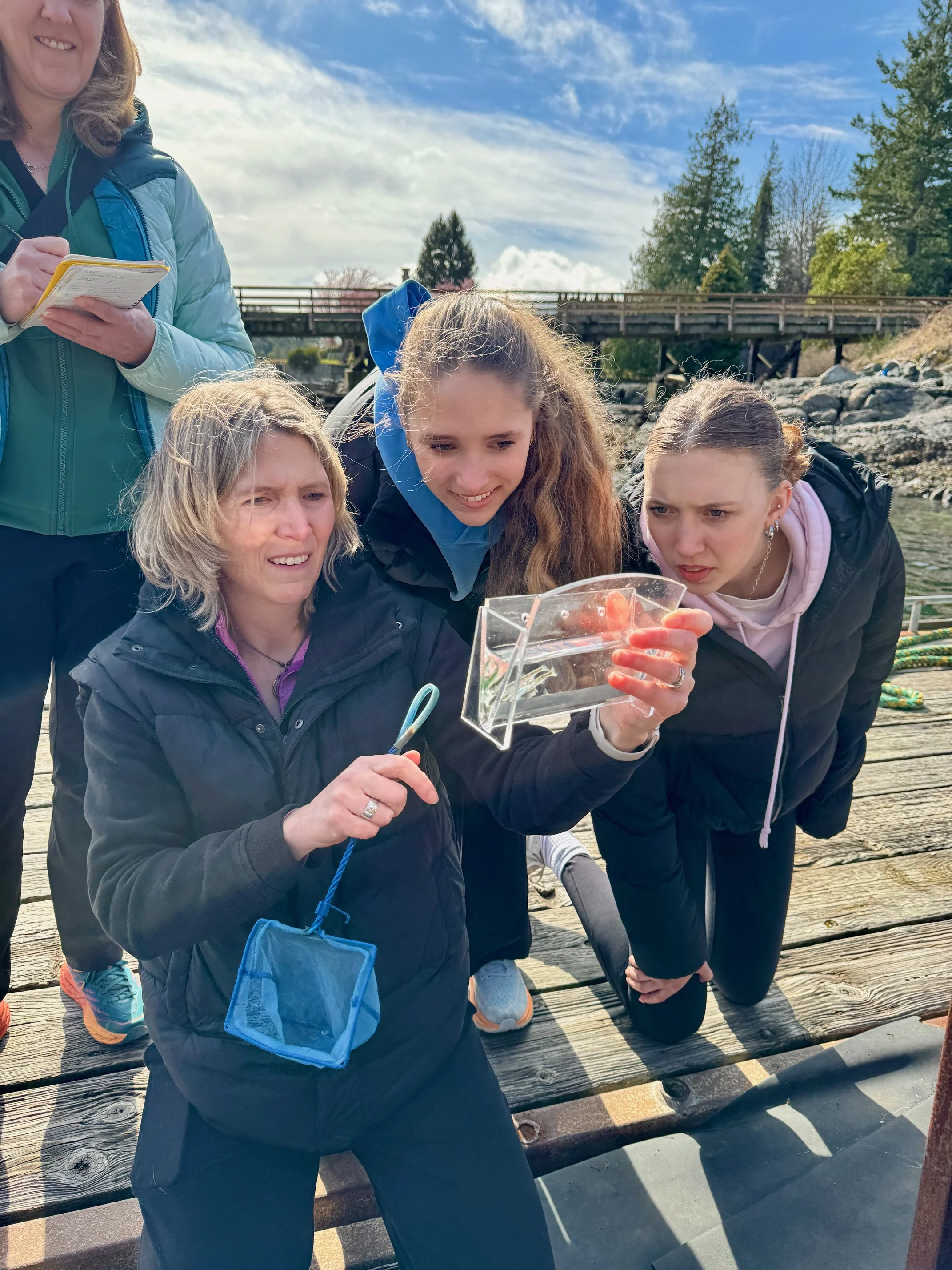
Juvenile Salmon or Smolts Surveys happen every Friday at 2:00 PM at our PODS site in Irvine's Landing between February and September. This is a great family friendly survey where we count, measure, and health check juvenile salmon and also identify and count bycatch. We use beach seining nets off the dock in three locations and pull in our catch to be processed. Are you ready to pull up those sleeves and help pull in seine nets? Please email Jenn at jenn@loonfoundation.org if you’re interested in volunteering for any of our surveys.
Larval Crab
As part of the Hakai Institute’s Sentinels of Change program, we monitor larval crabs, specifically Dungeness megalopae using a light trap at the PODS dock. We often catch many species of crabs as well as other invertebrates such as polychaetes, amphipods, isopods and even the occasional octopus. Please email Jenn at jenn@loonfoundation.org to sign up for the survey.
Juvenile Salmon Survey at Irvine's Landing
Juvenile Salmon or Smolts Surveys happen every Friday at 2:00 PM at our PODS site in Irvine's Landing between February and September. This is a great family friendly survey where we count, measure, and health check juvenile salmon and also identify and count bycatch. We use beach seining nets off the dock in three locations and pull in our catch to be processed. Are you ready to pull up those sleeves and help pull in seine nets? Please email Jenn at jenn@loonfoundation.org if you’re interested in volunteering for any of our surveys.
Larval Crab
As part of the Hakai Institute’s Sentinels of Change program, we monitor larval crabs, specifically Dungeness megalopae using a light trap at the PODS dock. We often catch many species of crabs as well as other invertebrates such as polychaetes, amphipods, isopods and even the occasional octopus. Please email Jenn at jenn@loonfoundation.org to sign up for the survey.
EGC Collection at Madeira Park
European Green Crab, or EGC, surveys are one of our more extensive surveys. From April till September we deploy crab traps any chance we get. EGCs are one of the world's worst invasive species, and they are coming our way! These surveys take two days, although help is always appreciated if you can only commit to one day. Traps are deployed at low tide from the beach and collected the next day at the same tide. All crabs, we often catch native species, are measured and sexed before being released, unless they are EGCs. We also often catch fish, snails, shrimp, and other species that are documented and released. If you like playing in the mud, this is the survey for you! Please email Jenn at jenn@loonfoundation.org if you're interested in volunteering for any of our surveys.
EGC Deployment at Madeira Park
European Green Crab, or EGC, surveys are one of our more extensive surveys. From April till September we deploy crab traps any chance we get. EGCs are one of the world's worst invasive species, and they are coming our way! These surveys take two days, although help is always appreciated if you can only commit to one day. Traps are deployed at low tide from the beach and collected the next day at the same tide. All crabs, we often catch native species, are measured and sexed before being released, unless they are EGCs. We also often catch fish, snails, shrimp, and other species that are documented and released. If you like playing in the mud, this is the survey for you! Please email Jenn at jenn@loonfoundation.org if you're interested in volunteering for any of our surveys.
Water Quality
Water quality surveys are one of our newer surveys that piggy backs off the Raincoast Foundation’s Anderson Creek Watershed Monitoring. We use three of Raincoast’s sites in Anderson Creek and measure multiple water quality parameters. These surveys are conducted monthly through the year. Water quality monitoring is a quick and easy survey if you have limited time! Please email Jenn at jenn@loonfoundation.org if you're interested in volunteering for any of our surveys.
Juvenile Salmon Survey at Irvine's Landing
Juvenile Salmon or Smolts Surveys happen every Friday at 2:00 PM at our PODS site in Irvine's Landing between February and September. This is a great family friendly survey where we count, measure, and health check juvenile salmon and also identify and count bycatch. We use beach seining nets off the dock in three locations and pull in our catch to be processed. Are you ready to pull up those sleeves and help pull in seine nets? Please email Jenn at jenn@loonfoundation.org if you’re interested in volunteering for any of our surveys.
Larval Crab
As part of the Hakai Institute’s Sentinels of Change program, we monitor larval crabs, specifically Dungeness megalopae using a light trap at the PODS dock. We often catch many species of crabs as well as other invertebrates such as polychaetes, amphipods, isopods and even the occasional octopus. Please email Jenn at jenn@loonfoundation.org to sign up for the survey.